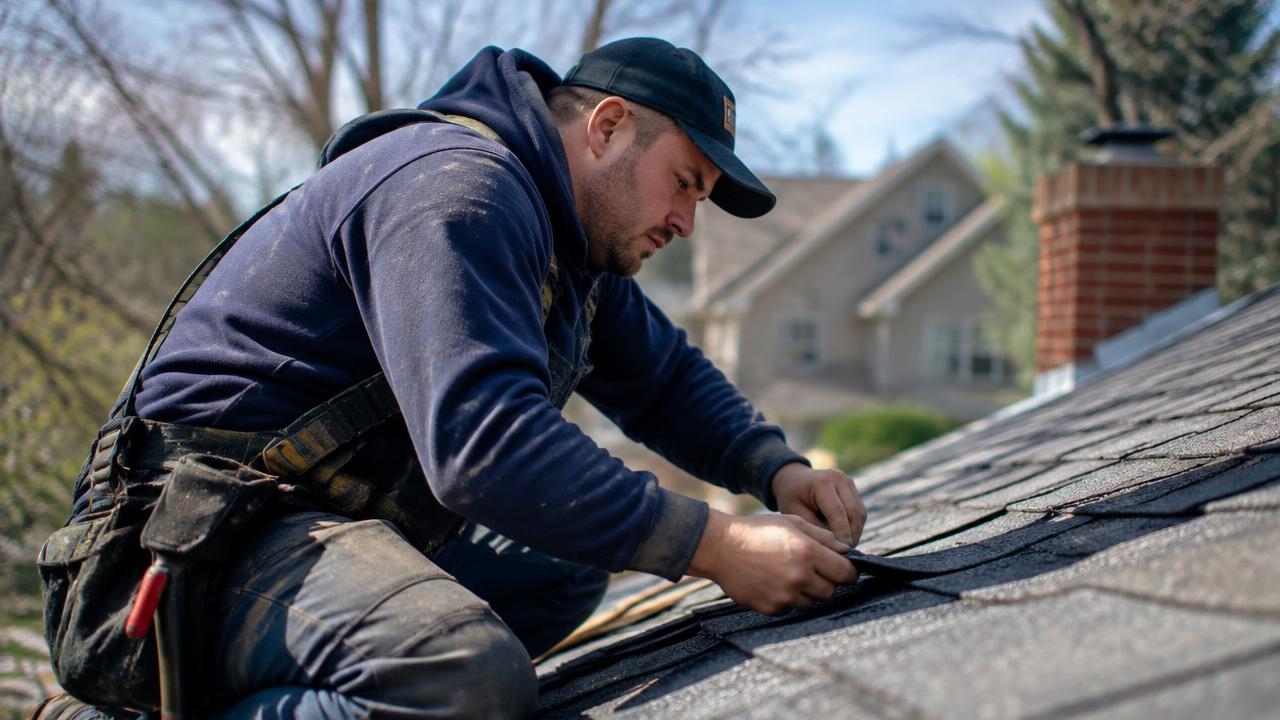
Roof repair services for homes across New Jersey
A dependable roof repair begins above the ceiling stain, not on top of it. Water can enter at a chimney, valley, skylight, vent, or lifted shingle, travel across the deck, and appear in a room several feet away. A careful inspection follows that path before anyone recommends a patch.
Common statewide repair work includes missing shingles, split vent boots, open flat-roof seams, worn chimney flashing, damaged ridge caps, clogged valleys, and storm-lifted edges. The correct repair depends on the material, roof age, slope, deck condition, and whether nearby shingles can still be lifted without cracking.
Good roof repair services leave evidence behind: attic photos, close views of the failed detail, a short explanation of the cause, and pictures after the repair. That record helps a homeowner compare a focused repair with roof maintenance, restoration, or a larger replacement without guessing.
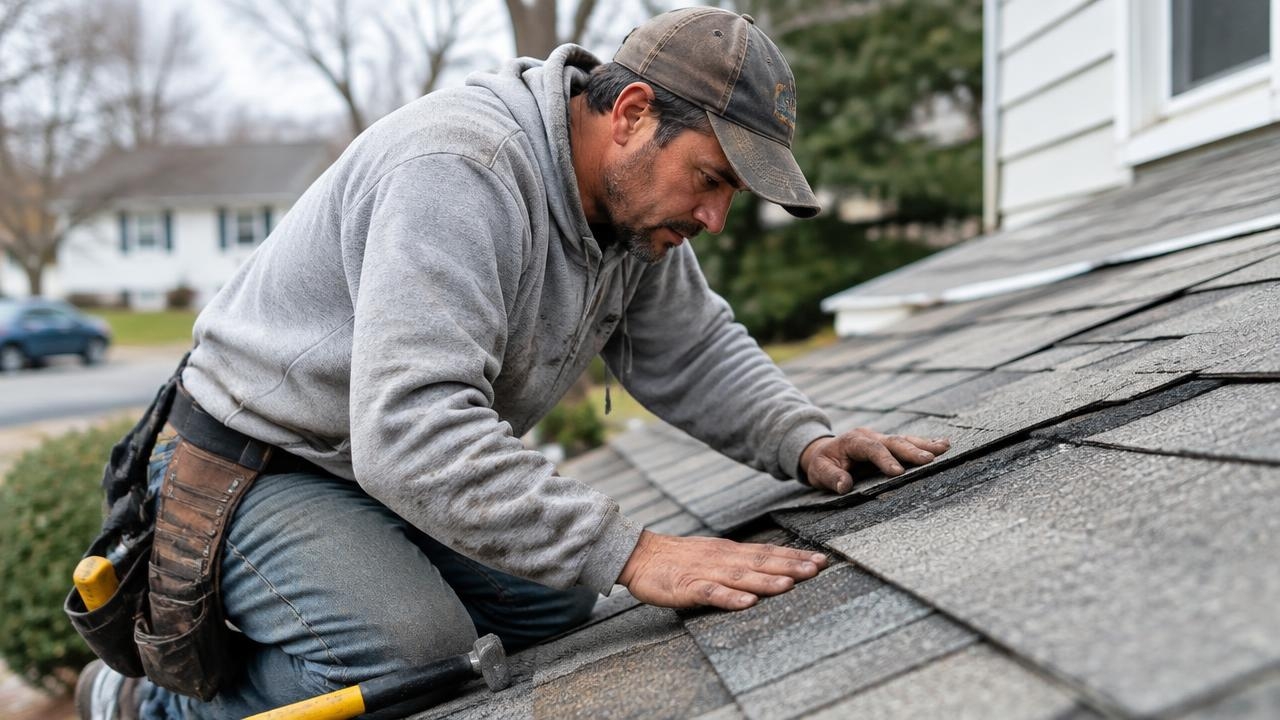
How do I know whether a New Jersey roof needs repair or replacement?
A local problem on an otherwise sound roof usually points toward repair. One leaking valley, one failed boot, or one damaged slope does not automatically make the entire roof a replacement project. Age, brittleness, repeated leaks, granule loss, soft decking, and the number of existing layers matter more than a single stain.
Replacement becomes more realistic when shingles are failing across several slopes or when every repair disturbs material that is too brittle to seal again. The honest answer comes from inspection photographs and a roof-by-roof explanation, not from a statewide rule or a sales quota.
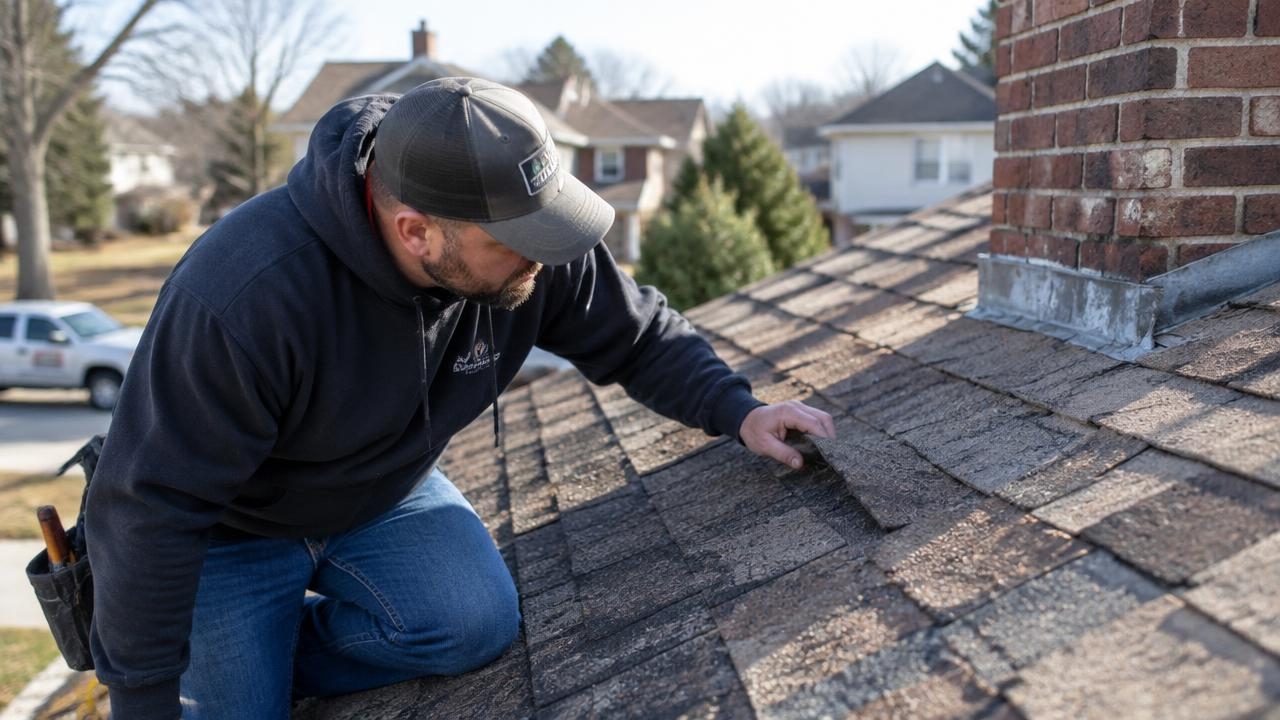
Roof leak repair in New Jersey
Roof leak repair is detective work. In older New Jersey homes, leaks often begin where materials change direction: chimney flashing, dormer step flashing, skylight corners, plumbing vents, satellite mounts, and transitions between a house roof and a porch roof.
The repair should open only the area needed, replace the failed component, rebuild the water-shedding layers in the right order, and test the result. Simply covering a moving leak with surface sealant can hide the symptom while wet decking continues to deteriorate underneath.
What does roof leak repair cost in New Jersey?
The cost follows the cause, access, pitch, material, and how long water has been entering. A vent boot, a chimney counterflashing rebuild, a rotted valley, and structural deck damage are different jobs.
A written estimate should identify the leak source, show the damaged material, separate required work from optional work, and explain what would change the price once the roof is opened. Homeowners should not have to decode a one-line number.
Emergency roof repair after New Jersey storms
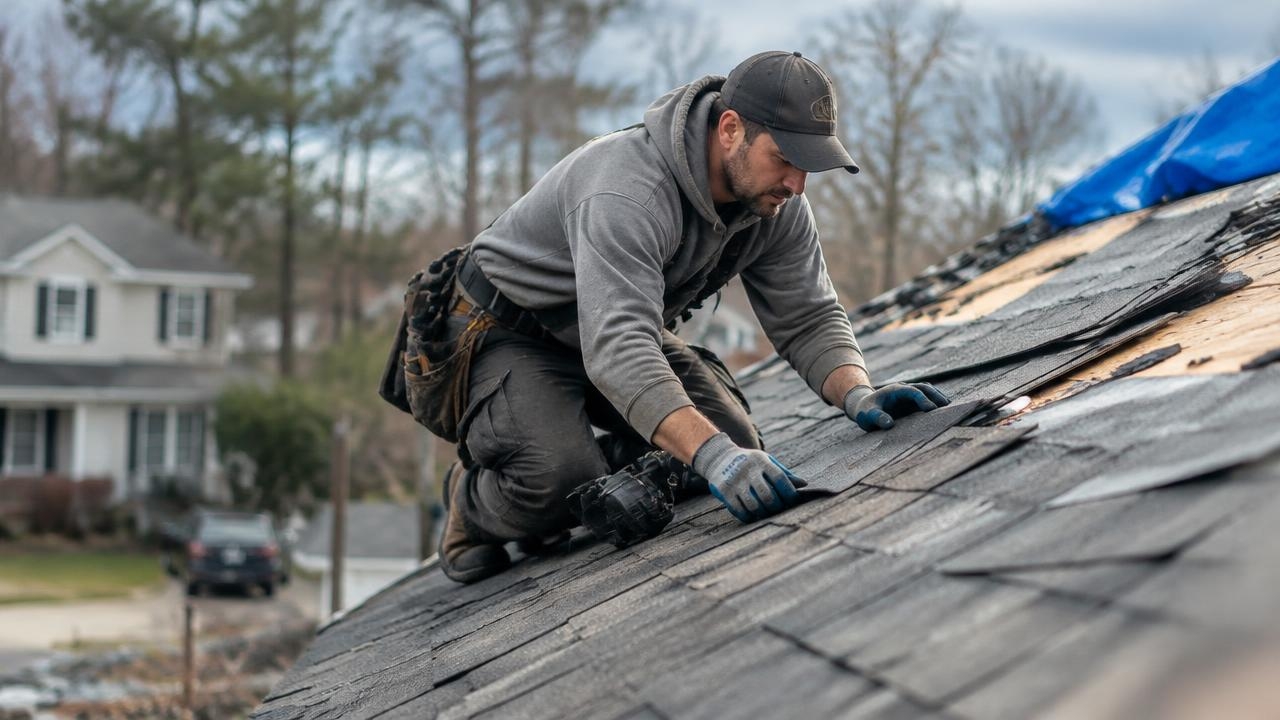
Emergency roof repair starts with safety and temporary dry-in work. A fallen branch, peeled shingle field, or punctured deck may need tarping and temporary sealing before permanent materials can be installed in safe weather.
Photographs taken before, during, and after emergency work matter for the homeowner’s records and for any insurance claim. Once the roof is stable, the permanent repair can be planned around the actual damage instead of the first frightening view from the yard.
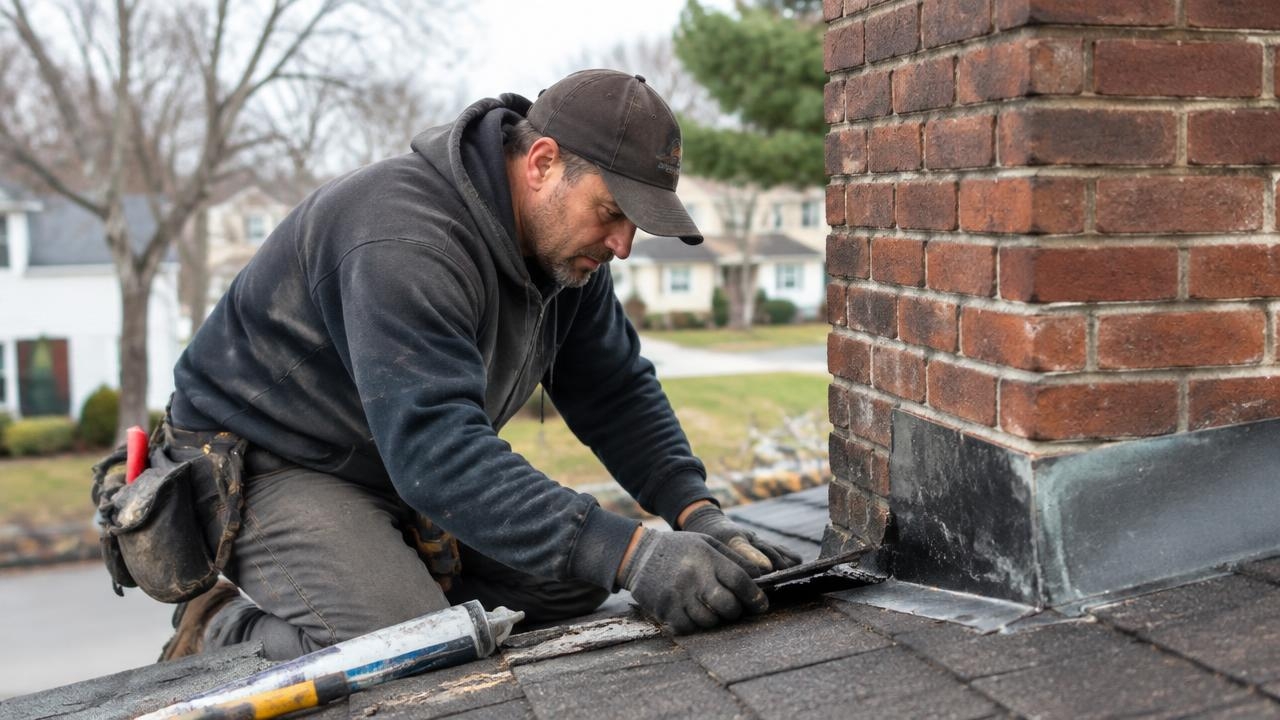
What types of New Jersey roofs can be repaired?
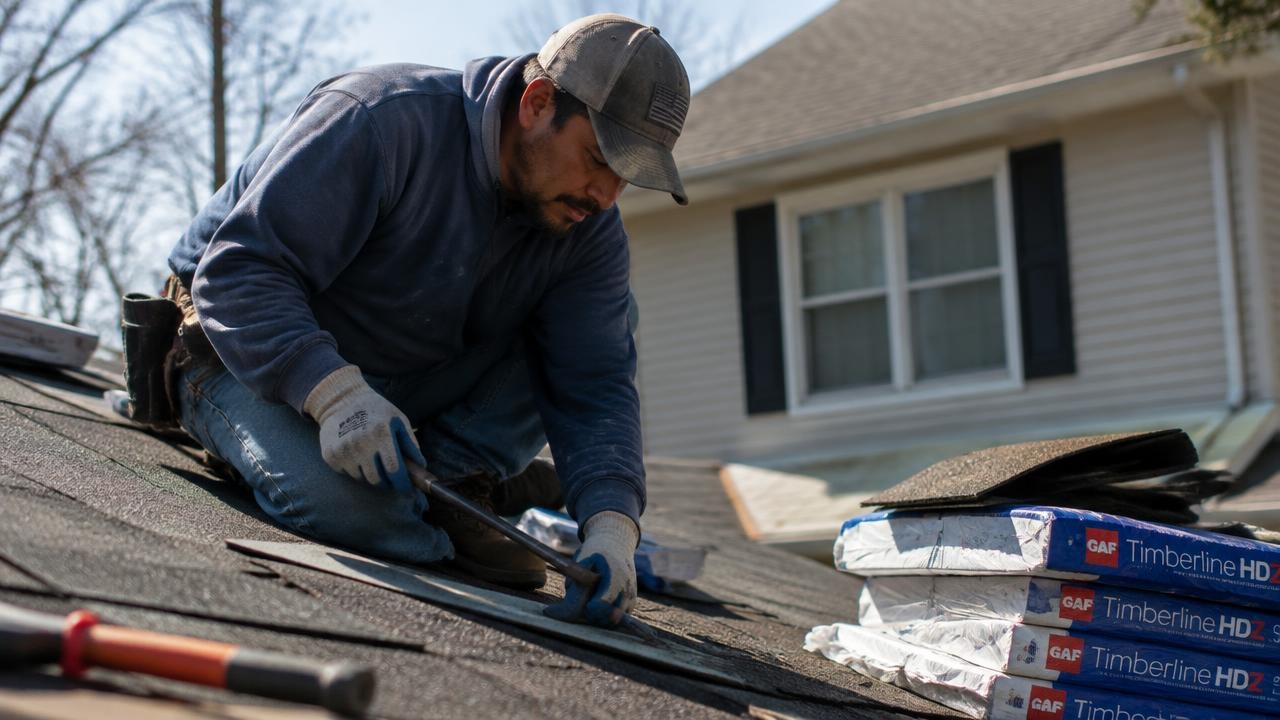
Asphalt shingle roofs make up much of the statewide repair work, including three-tab shingles, architectural shingles, hips, ridges, and valleys. Low-slope porches, additions, garages, and flat roofs need a different eye because ponding water finds seams and penetrations that a steep roof might shed.
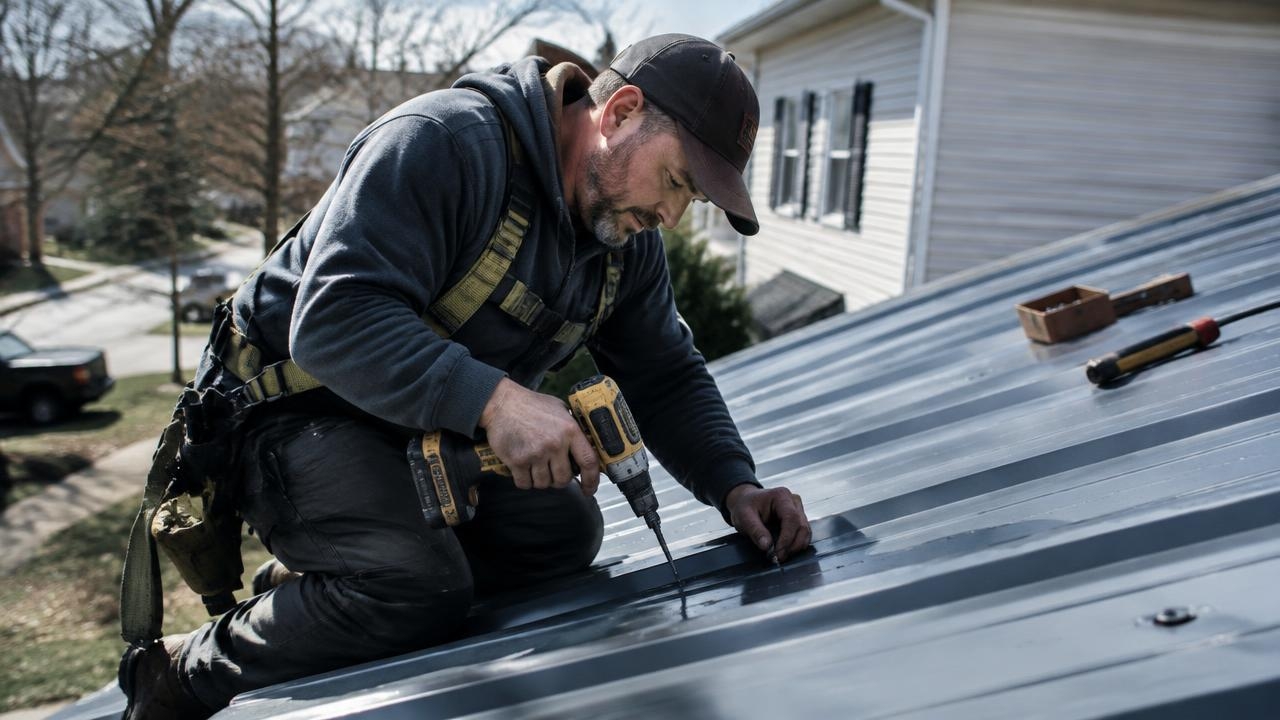
Metal roof details, slate, tile roofs, EPDM, TPO-style membranes, roof coatings, skylights, gutters, fascia, and soffit transitions can all be part of a repair visit. The material name alone does not decide the repair; the failure point does.
How long does a roof repair take in New Jersey?
A single boot, flashing detail, or small shingle repair may be completed in hours. Rebuilding a valley, replacing rotted decking, correcting a chimney cricket, or tying in a damaged section can take longer and may depend on weather and material matching.
The schedule should be explained before work begins. A careful crew also protects landscaping, keeps fasteners controlled, checks the attic or ceiling below when access allows, and leaves the homeowner with a clear record of what changed.
Should roof repairs come with written warranty terms?
Homeowners should ask what workmanship coverage applies, which material warranties transfer or remain in place, and what maintenance is expected after the repair.
A repair company should be able to explain the difference between a manufacturer warranty, a workmanship commitment, and the remaining life of the untouched roof. Those are three separate subjects and should not be blended into one vague promise.
Roof Repair NJ areas and housing patterns
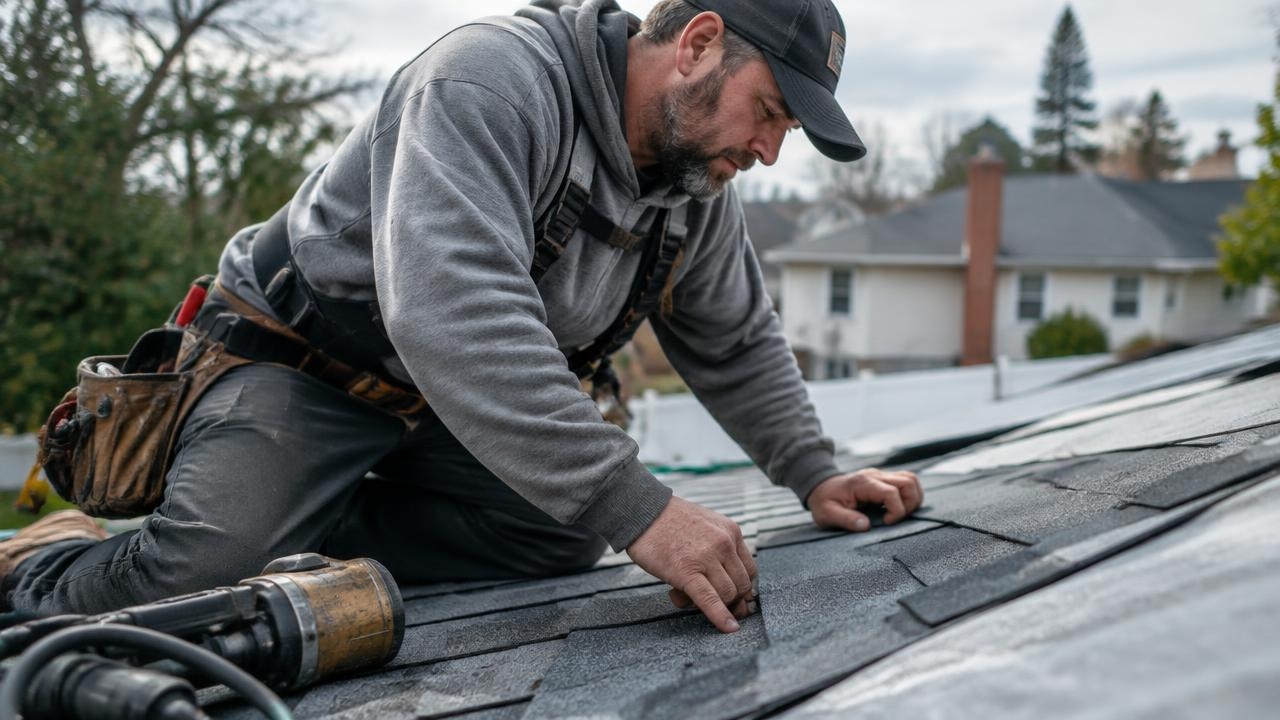
New Jersey is not one roof market. Dense older housing in North Jersey, suburban shingle roofs in Central Jersey, and coastal weather exposure in South Jersey create different inspection questions, even when the homeowner uses the same search phrase.
North Jersey roof repair patterns
Newark, Clifton, Jersey City, and Hackensack illustrate the kinds of North Jersey roof problems described in the report: older shingles, flat additions, chimneys, closely spaced homes, and repairs around dormers and porches. Essex, Bergen, Passaic, and Hudson County conditions are used here as statewide planning context, not as a confirmed coverage promise.
Central and South Jersey roof repair patterns
Central and South Jersey homes often bring larger suburban roof planes, attic ventilation questions, wind-driven rain, and storm exposure into the repair decision. Counties and communities should be added only after Paul confirms where the business actually works.
Why one statewide page can still be specific
A statewide page can explain leak tracing, flashing failures, flat-roof seams, shingle matching, storm documentation, and repair-versus-replacement judgment without inventing a separate office or location page for every town. Specificity comes from the roof details, not from repeating a city name.
Roof patch, shingle repair, and roof repair near me in New Jersey
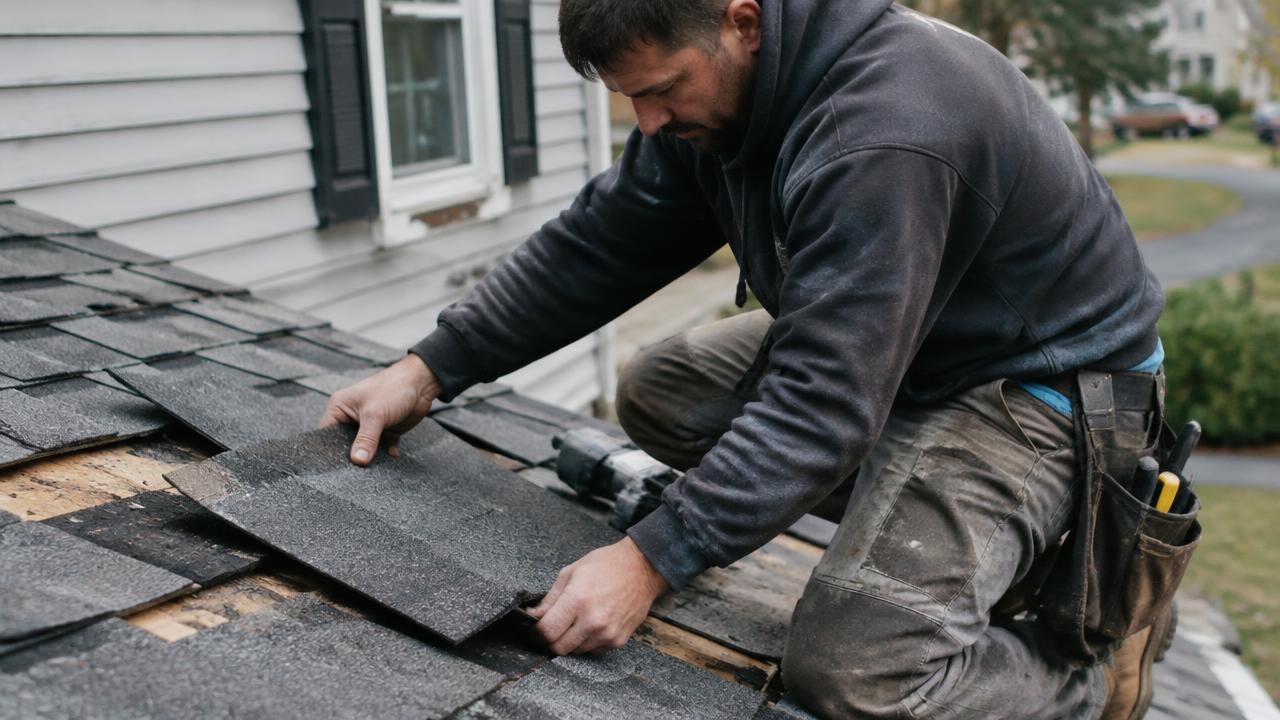
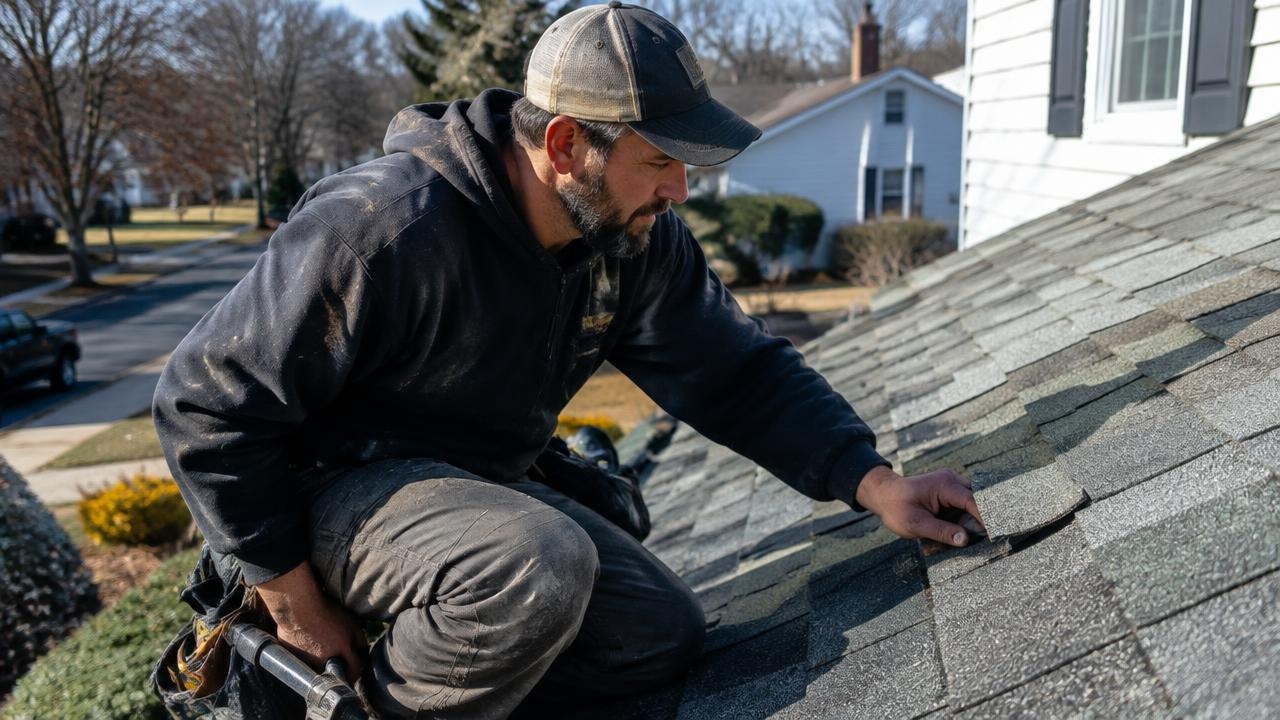
A roof patch can be the right answer after a branch strike or a small puncture, but only when the deck and surrounding material are sound. Shingle repair requires lifting and resealing nearby courses without breaking brittle tabs, while a roof repair near me search usually means the homeowner needs the leak source identified quickly.
Local roof repair should not become a race to cover the stain. A roof repair contractor, roofer, or roofing contractor should trace the entry point, check the attic side when possible, and explain whether the fix is a patch, a section repair, maintenance, restoration, or the first evidence that replacement deserves a separate estimate.
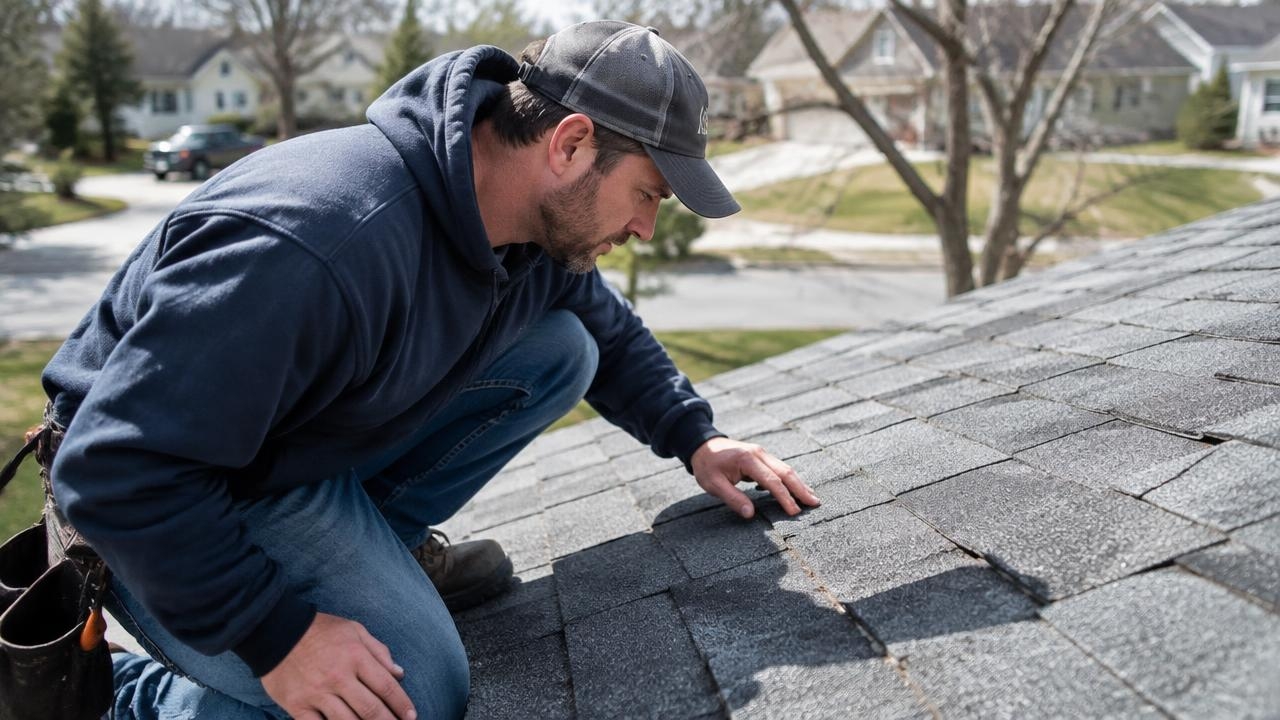
What should a New Jersey roof inspection include?
A useful roof inspection covers shingles, flashing, valleys, vents, chimneys, skylights, gutters, fascia, soffit, attic moisture, ventilation, insulation, and visible deck concerns. It should distinguish active leaks from old stains and urgent openings from items that can be monitored.
- Photograph the stain and the roof detail directly above its likely path.
- Check chimney flashing, step flashing, counterflashing, and mortar joints.
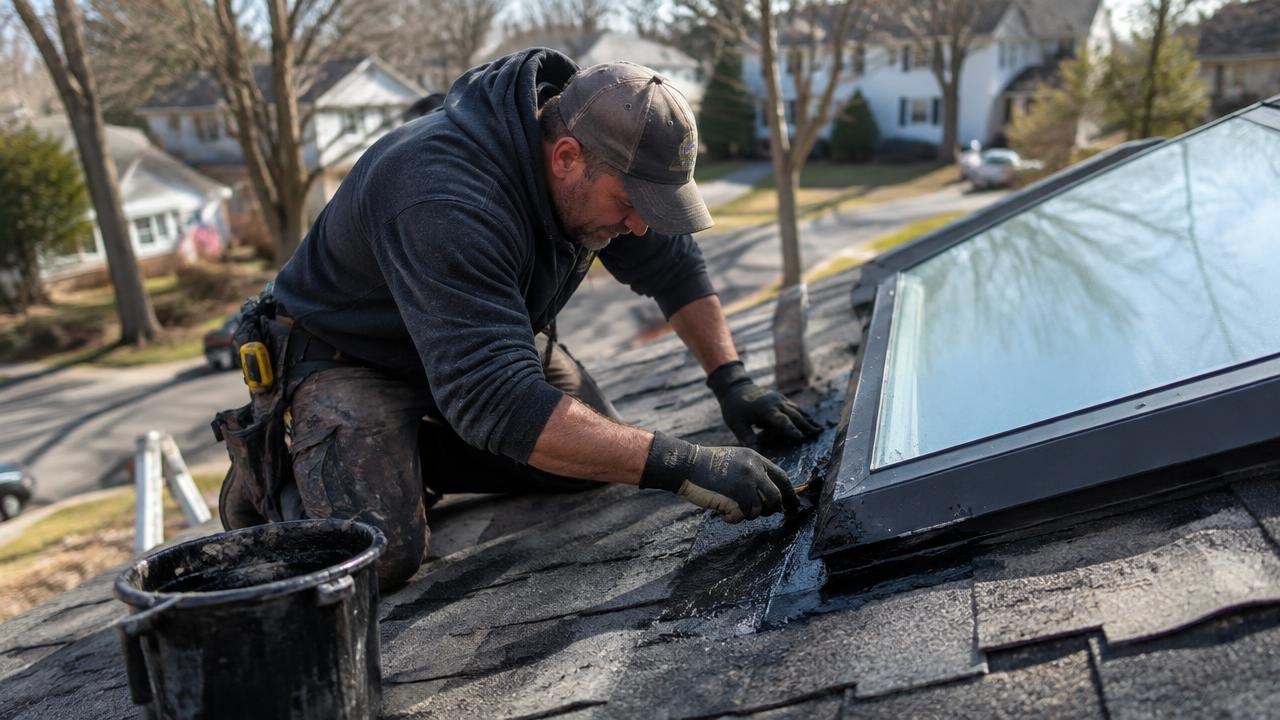
- Inspect vent boots, exhaust caps, skylights, valleys, and ridge caps.
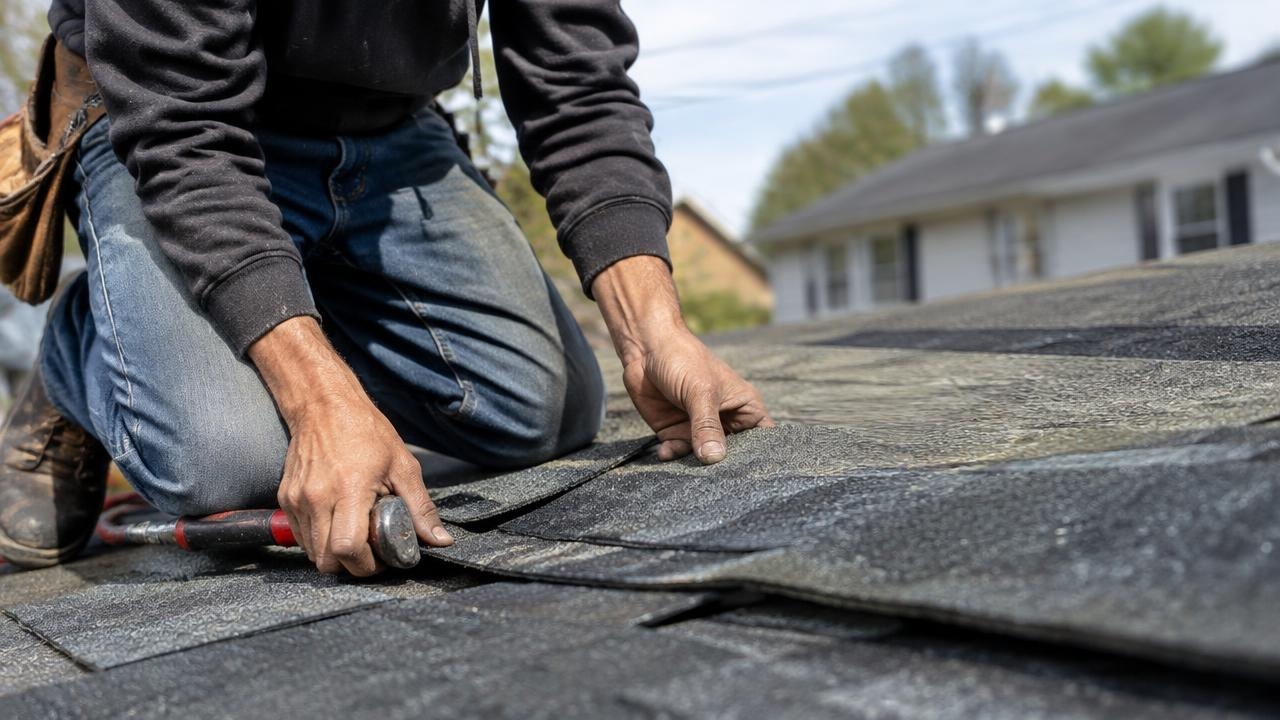
- Look for lifted, curled, cracked, or missing asphalt shingles.
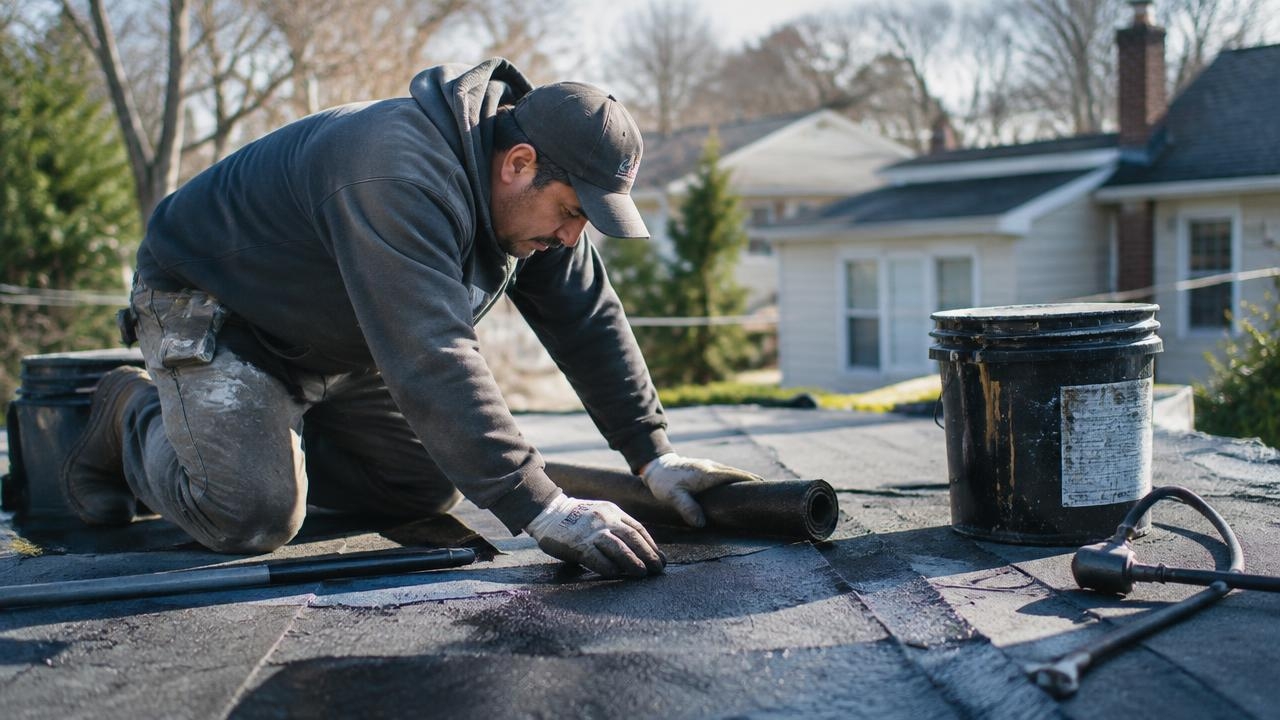
- Check flat-roof seams, ponding, drains, and edge metal.
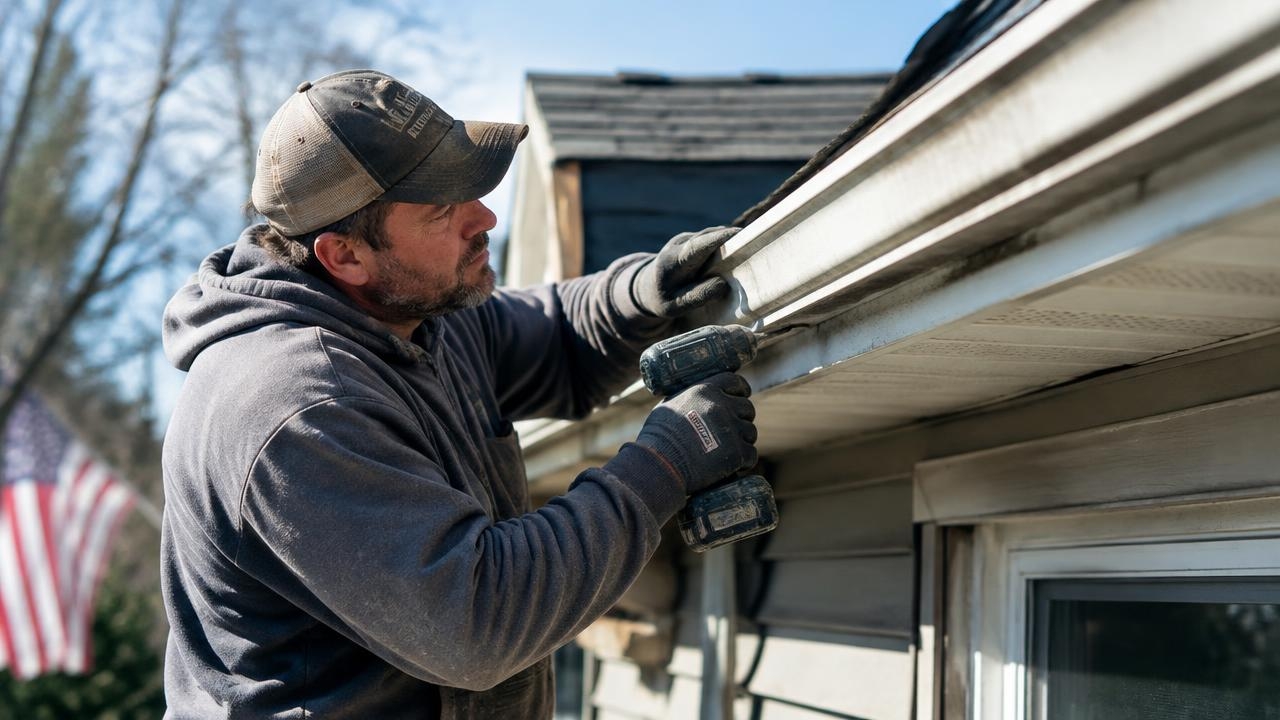
- Review gutters, fascia, soffit, attic humidity, and ventilation.
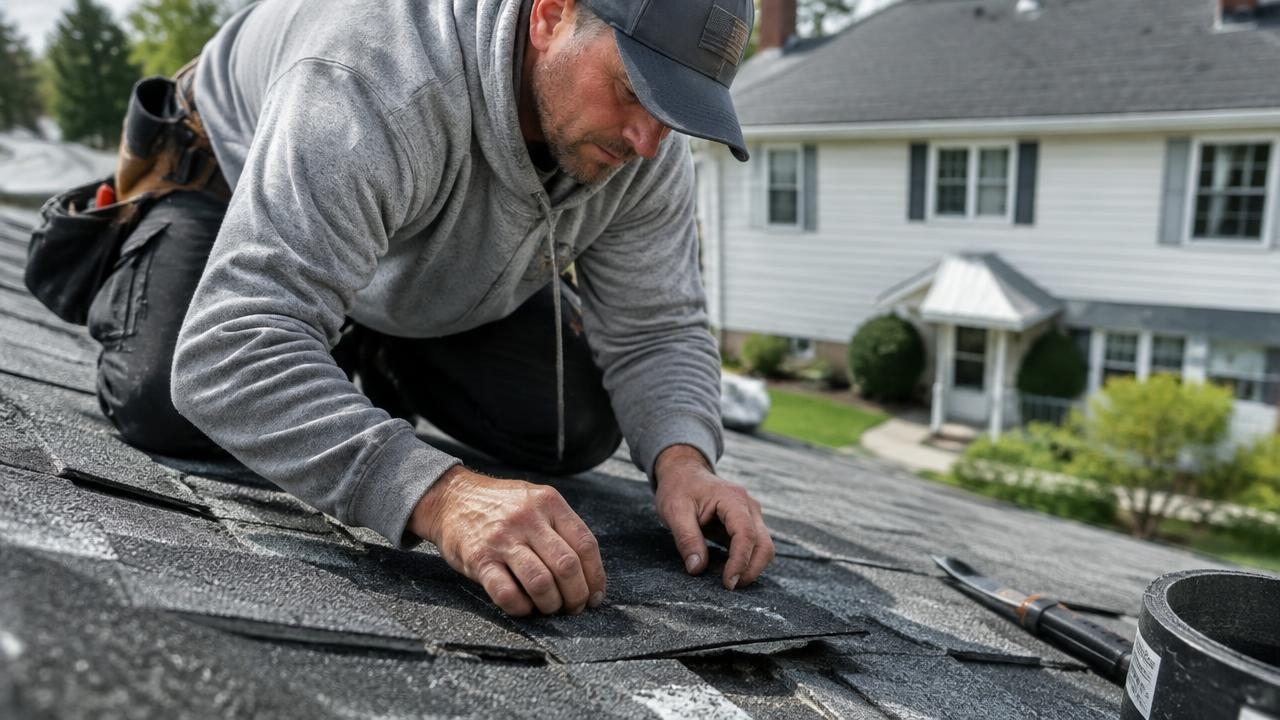
Roof Repair NJ photo checklist
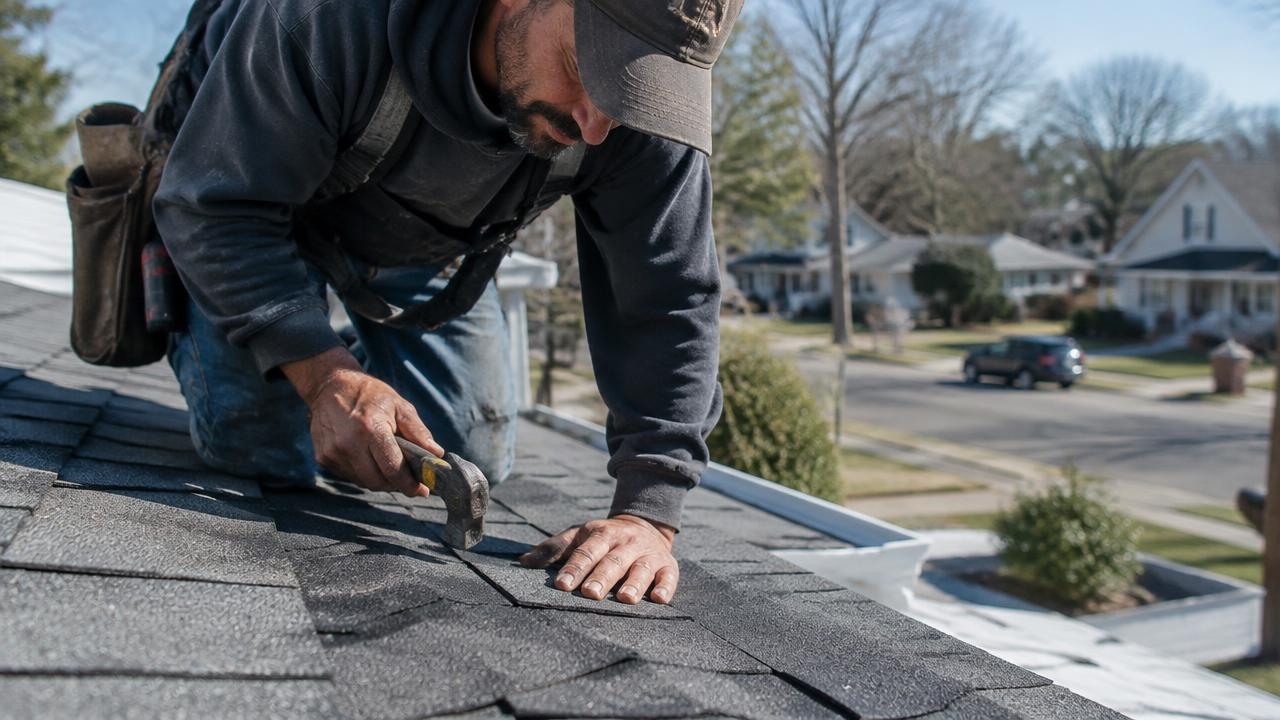
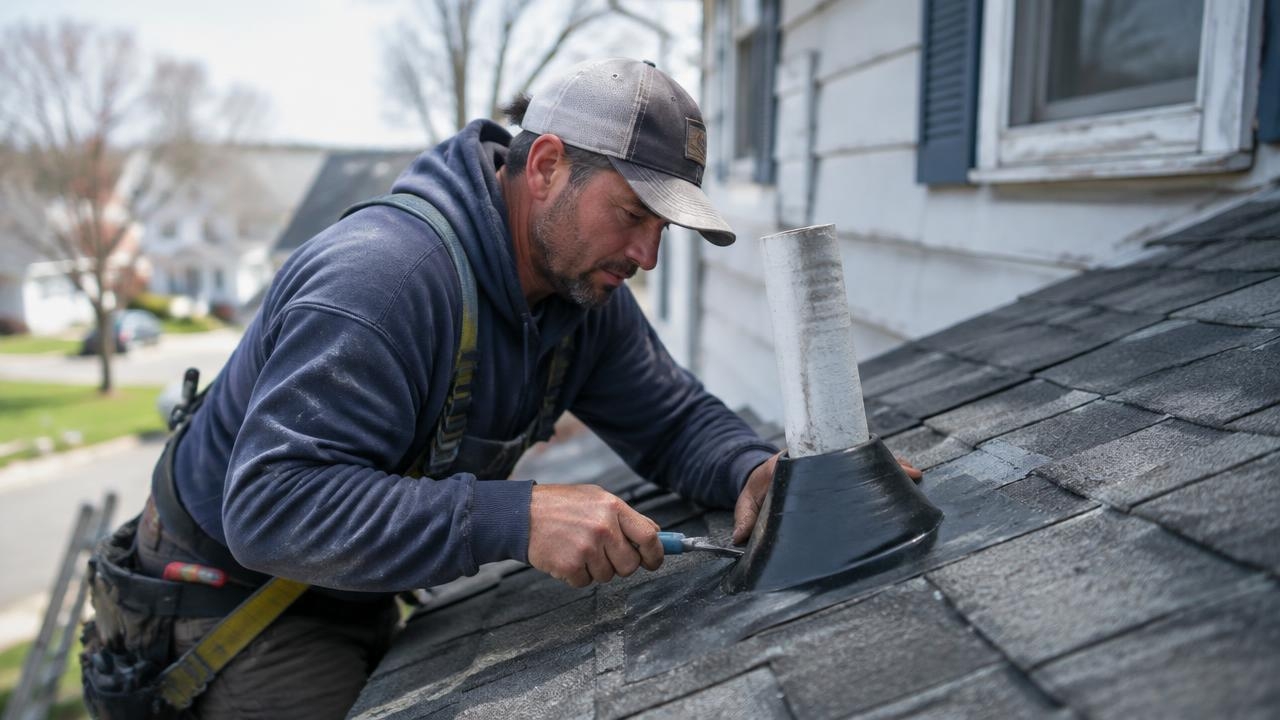
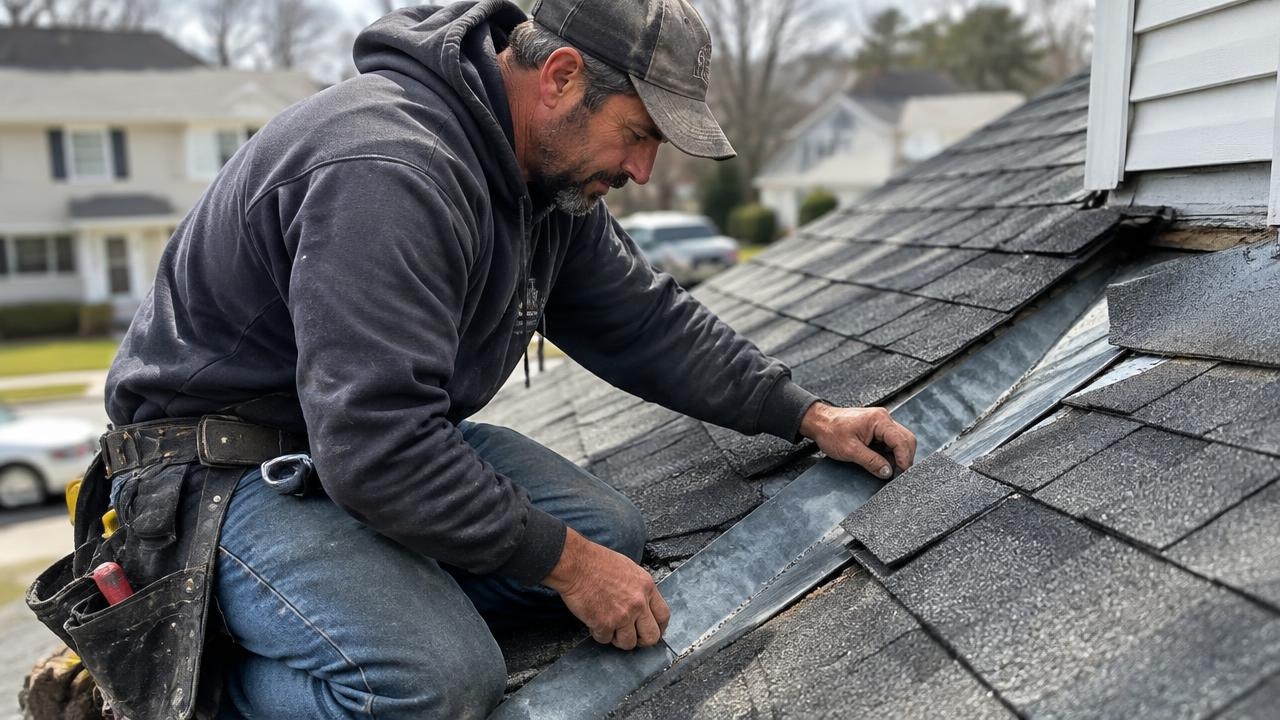
The placeholder photographs below show the kinds of details a homeowner should expect to see documented during an inspection and repair. Final production images should be real project photographs supplied or approved by Paul.
View all 7 project photos
Roof repair questions New Jersey homeowners ask
Can a roof be repaired during a New Jersey winter?
Yes, although cold weather changes how sealants and shingles behave. Winter work may emphasize mechanical fastening, temporary dry-in protection, and a planned return for final sealing when temperatures allow. An active leak should not wait for spring simply because the calendar is inconvenient.
Will replacement shingles match the rest of my roof?
New shingles rarely match weathered shingles perfectly, even when the product and color name are the same. Slope visibility, remaining roof life, and the size of the repair should be discussed before material is installed so the appearance is not a surprise.
Can you repair only one slope or one section of a roof?
Often, yes. Section repair works when the surrounding shingles and underlayment can accept new material without widespread cracking. If every lifted shingle breaks, the scope may need to expand or the repair-versus-replacement answer may change.
What are the early signs that a roof is leaking?
Look for ceiling stains, bubbling paint, musty attic odors, damp insulation, shingles in the yard, granules near downspouts, dark streaks around flashing, and daylight around penetrations. Early documentation gives the roofer a better trail to follow.
What should I do immediately after spotting a roof leak?
Move valuables, contain dripping water, photograph the stain, note when it appears, and avoid climbing onto a wet roof. If it is safe, an attic photograph of the underside can help the inspection, but the entry point still has to be verified from above.
Are permits needed for roof repair in New Jersey?
Like-for-like repair and structural replacement can raise different municipal questions. The answer should be confirmed for the actual scope and town rather than guessed in statewide copy.
How do roof repair specialists document their work?
Roof repair specialists should photograph the failed detail, the opened layers, the replacement material, and the finished surface. A roof repair specialist should also explain what remains old, what was changed, and which areas deserve monitoring.
When is roof restoration better than another patch?
Restoration deserves a look when the roof structure is sound but the surface or coating system is aging unevenly. It is not a shortcut around rotted decking, failed flashing, or drainage problems; those defects have to be corrected before restoration can be judged honestly.
Expanded Roof Repair NJ notes, terms, and inspection sentences
This collapsed section carries topical report terms and entities in ordinary inspection sentences for later Cora verification. It supplements the visible page; it does not replace confirmed business facts.
Roof repair notes for shingles, flashing, and chimneys
Roof leak repair notes for flat roofs and low slopes
Roof inspection notes for New Jersey counties and housing types
Roof restoration, maintenance, and replacement notes
Emergency roof repair and storm documentation notes
For New Jersey homes, roofing can matter when a small roof leak is traced back to flashing, decking, or worn shingles.
A careful roof repair visit can document roof, note related wear, and explain the next step in plain language.
When company appears in an inspection report, homeowners should ask which roof surface, seam, or detail needs attention first.
Across New Jersey, siding is one of the details that can decide whether a repair stays local or grows into a larger project.
A roofer evaluating gutters should also look at gutters, valleys, vents, and the attic side of the roof deck.
For New Jersey homes, shingle can matter when a small roof leak is traced back to flashing, decking, or worn shingles.
A careful roof repair visit can document roofs, note related wear, and explain the next step in plain language.
When leak appears in an inspection report, homeowners should ask which roof surface, seam, or detail needs attention first.
Across New Jersey, homeowners is one of the details that can decide whether a repair stays local or grows into a larger project.
A roofer evaluating metal should also look at gutters, valleys, vents, and the attic side of the roof deck.
For New Jersey homes, flashing can matter when a small roof leak is traced back to flashing, decking, or worn shingles.
A careful roof repair visit can document asphalt, note related wear, and explain the next step in plain language.
When residential roofing appears in an inspection report, homeowners should ask which roof surface, seam, or detail needs attention first.
Across New Jersey, attic is one of the details that can decide whether a repair stays local or grows into a larger project.
A roofer evaluating slate should also look at gutters, valleys, vents, and the attic side of the roof deck.
For New Jersey homes, chimney can matter when a small roof leak is traced back to flashing, decking, or worn shingles.
A careful roof repair visit can document insulation, note related wear, and explain the next step in plain language.
When roofer appears in an inspection report, homeowners should ask which roof surface, seam, or detail needs attention first.
Across New Jersey, roofing contractor is one of the details that can decide whether a repair stays local or grows into a larger project.
A roofer evaluating inspections should also look at gutters, valleys, vents, and the attic side of the roof deck.
For New Jersey homes, roofing contractors can matter when a small roof leak is traced back to flashing, decking, or worn shingles.
A careful roof repair visit can document roofers, note related wear, and explain the next step in plain language.
When flat roof appears in an inspection report, homeowners should ask which roof surface, seam, or detail needs attention first.
Across New Jersey, EPDM is one of the details that can decide whether a repair stays local or grows into a larger project.
A roofer evaluating skylights should also look at gutters, valleys, vents, and the attic side of the roof deck.
For New Jersey homes, warranties can matter when a small roof leak is traced back to flashing, decking, or worn shingles.
A careful roof repair visit can document metal roofing, note related wear, and explain the next step in plain language.
When asphalt shingles appears in an inspection report, homeowners should ask which roof surface, seam, or detail needs attention first.
Across New Jersey, copper is one of the details that can decide whether a repair stays local or grows into a larger project.
A roofer evaluating roofing materials should also look at gutters, valleys, vents, and the attic side of the roof deck.
For New Jersey homes, shingle roofs can matter when a small roof leak is traced back to flashing, decking, or worn shingles.
A careful roof repair visit can document soffit, note related wear, and explain the next step in plain language.
When waterproofing appears in an inspection report, homeowners should ask which roof surface, seam, or detail needs attention first.
Across New Jersey, fascia is one of the details that can decide whether a repair stays local or grows into a larger project.
A roofer evaluating shingle roof should also look at gutters, valleys, vents, and the attic side of the roof deck.
For New Jersey homes, aluminum can matter when a small roof leak is traced back to flashing, decking, or worn shingles.
A careful roof repair visit can document tile roofs, note related wear, and explain the next step in plain language.
When stucco appears in an inspection report, homeowners should ask which roof surface, seam, or detail needs attention first.
Across New Jersey, humidity is one of the details that can decide whether a repair stays local or grows into a larger project.
A roofer evaluating brick should also look at gutters, valleys, vents, and the attic side of the roof deck.
For New Jersey homes, cool roof can matter when a small roof leak is traced back to flashing, decking, or worn shingles.
A careful roof repair visit can document leaf debris, note related wear, and explain the next step in plain language.
When North Jersey appears in an inspection report, homeowners should ask which roof surface, seam, or detail needs attention first.
Across New Jersey, radiant barrier is one of the details that can decide whether a repair stays local or grows into a larger project.
A roofer evaluating vinyl siding should also look at gutters, valleys, vents, and the attic side of the roof deck.
For New Jersey homes, South Jersey can matter when a small roof leak is traced back to flashing, decking, or worn shingles.
A careful roof repair visit can document mold, note related wear, and explain the next step in plain language.
When roof coating appears in an inspection report, homeowners should ask which roof surface, seam, or detail needs attention first.
Across New Jersey, metal roofing systems is one of the details that can decide whether a repair stays local or grows into a larger project.
A roofer evaluating commercial roofing should also look at gutters, valleys, vents, and the attic side of the roof deck.
For New Jersey homes, emergency roof repair can matter when a small roof leak is traced back to flashing, decking, or worn shingles.
A careful roof repair visit can document roof repair services, note related wear, and explain the next step in plain language.
When roof leak repair appears in an inspection report, homeowners should ask which roof surface, seam, or detail needs attention first.
Across New Jersey, shingle repair is one of the details that can decide whether a repair stays local or grows into a larger project.
A roofer evaluating insurance claim should also look at gutters, valleys, vents, and the attic side of the roof deck.
For New Jersey homes, ventilation can matter when a small roof leak is traced back to flashing, decking, or worn shingles.
A careful roof repair visit can document decking, note related wear, and explain the next step in plain language.
When underlayment appears in an inspection report, homeowners should ask which roof surface, seam, or detail needs attention first.
Across New Jersey, ridge cap is one of the details that can decide whether a repair stays local or grows into a larger project.
A roofer evaluating roof valley should also look at gutters, valleys, vents, and the attic side of the roof deck.
For New Jersey homes, vent boot can matter when a small roof leak is traced back to flashing, decking, or worn shingles.
A careful roof repair visit can document chimney flashing, note related wear, and explain the next step in plain language.
When roof inspection appears in an inspection report, homeowners should ask which roof surface, seam, or detail needs attention first.
Across New Jersey, roof maintenance is one of the details that can decide whether a repair stays local or grows into a larger project.
A roofer evaluating storm damage should also look at gutters, valleys, vents, and the attic side of the roof deck.
For New Jersey homes, flat roofs can matter when a small roof leak is traced back to flashing, decking, or worn shingles.
A careful roof repair visit can document metal roofs, note related wear, and explain the next step in plain language.
When roof replacement appears in an inspection report, homeowners should ask which roof surface, seam, or detail needs attention first.
Across New Jersey, roof patch is one of the details that can decide whether a repair stays local or grows into a larger project.
A roofer evaluating valley flashing should also look at gutters, valleys, vents, and the attic side of the roof deck.
When roofing appears in an inspection report, homeowners should ask which roof surface, seam, or detail needs attention first.
Across New Jersey, roof is one of the details that can decide whether a repair stays local or grows into a larger project.
A roofer evaluating company should also look at gutters, valleys, vents, and the attic side of the roof deck.
For New Jersey homes, siding can matter when a small roof leak is traced back to flashing, decking, or worn shingles.
A careful roof repair visit can document gutters, note related wear, and explain the next step in plain language.
When shingle appears in an inspection report, homeowners should ask which roof surface, seam, or detail needs attention first.
Across New Jersey, roofs is one of the details that can decide whether a repair stays local or grows into a larger project.
A roofer evaluating leak should also look at gutters, valleys, vents, and the attic side of the roof deck.
For New Jersey homes, homeowners can matter when a small roof leak is traced back to flashing, decking, or worn shingles.
A careful roof repair visit can document metal, note related wear, and explain the next step in plain language.
When flashing appears in an inspection report, homeowners should ask which roof surface, seam, or detail needs attention first.
Across New Jersey, asphalt is one of the details that can decide whether a repair stays local or grows into a larger project.
A roofer evaluating residential roofing should also look at gutters, valleys, vents, and the attic side of the roof deck.
For New Jersey homes, attic can matter when a small roof leak is traced back to flashing, decking, or worn shingles.
A careful roof repair visit can document slate, note related wear, and explain the next step in plain language.
When chimney appears in an inspection report, homeowners should ask which roof surface, seam, or detail needs attention first.
Across New Jersey, insulation is one of the details that can decide whether a repair stays local or grows into a larger project.
A roofer evaluating roofer should also look at gutters, valleys, vents, and the attic side of the roof deck.
For New Jersey homes, roofing contractor can matter when a small roof leak is traced back to flashing, decking, or worn shingles.
A careful roof repair visit can document inspections, note related wear, and explain the next step in plain language.
When roofing contractors appears in an inspection report, homeowners should ask which roof surface, seam, or detail needs attention first.
Across New Jersey, roofers is one of the details that can decide whether a repair stays local or grows into a larger project.
A roofer evaluating flat roof should also look at gutters, valleys, vents, and the attic side of the roof deck.
For New Jersey homes, EPDM can matter when a small roof leak is traced back to flashing, decking, or worn shingles.
A careful roof repair visit can document skylights, note related wear, and explain the next step in plain language.
When warranties appears in an inspection report, homeowners should ask which roof surface, seam, or detail needs attention first.
Across New Jersey, metal roofing is one of the details that can decide whether a repair stays local or grows into a larger project.
A roofer evaluating asphalt shingles should also look at gutters, valleys, vents, and the attic side of the roof deck.
For New Jersey homes, copper can matter when a small roof leak is traced back to flashing, decking, or worn shingles.
A careful roof repair visit can document roofing materials, note related wear, and explain the next step in plain language.
When shingle roofs appears in an inspection report, homeowners should ask which roof surface, seam, or detail needs attention first.
Across New Jersey, soffit is one of the details that can decide whether a repair stays local or grows into a larger project.
A roofer evaluating waterproofing should also look at gutters, valleys, vents, and the attic side of the roof deck.
For New Jersey homes, fascia can matter when a small roof leak is traced back to flashing, decking, or worn shingles.
A careful roof repair visit can document shingle roof, note related wear, and explain the next step in plain language.
When aluminum appears in an inspection report, homeowners should ask which roof surface, seam, or detail needs attention first.
Across New Jersey, tile roofs is one of the details that can decide whether a repair stays local or grows into a larger project.
A roofer evaluating stucco should also look at gutters, valleys, vents, and the attic side of the roof deck.
For New Jersey homes, humidity can matter when a small roof leak is traced back to flashing, decking, or worn shingles.
A careful roof repair visit can document brick, note related wear, and explain the next step in plain language.
When cool roof appears in an inspection report, homeowners should ask which roof surface, seam, or detail needs attention first.
Across New Jersey, leaf debris is one of the details that can decide whether a repair stays local or grows into a larger project.
A roofer evaluating North Jersey should also look at gutters, valleys, vents, and the attic side of the roof deck.
For New Jersey homes, radiant barrier can matter when a small roof leak is traced back to flashing, decking, or worn shingles.
A careful roof repair visit can document vinyl siding, note related wear, and explain the next step in plain language.
When South Jersey appears in an inspection report, homeowners should ask which roof surface, seam, or detail needs attention first.
Across New Jersey, mold is one of the details that can decide whether a repair stays local or grows into a larger project.
A roofer evaluating roof coating should also look at gutters, valleys, vents, and the attic side of the roof deck.
For New Jersey homes, metal roofing systems can matter when a small roof leak is traced back to flashing, decking, or worn shingles.
A careful roof repair visit can document commercial roofing, note related wear, and explain the next step in plain language.
When emergency roof repair appears in an inspection report, homeowners should ask which roof surface, seam, or detail needs attention first.
Across New Jersey, roof repair services is one of the details that can decide whether a repair stays local or grows into a larger project.
A roofer evaluating roof leak repair should also look at gutters, valleys, vents, and the attic side of the roof deck.
For New Jersey homes, shingle repair can matter when a small roof leak is traced back to flashing, decking, or worn shingles.
A careful roof repair visit can document insurance claim, note related wear, and explain the next step in plain language.
When ventilation appears in an inspection report, homeowners should ask which roof surface, seam, or detail needs attention first.
Across New Jersey, decking is one of the details that can decide whether a repair stays local or grows into a larger project.
A roofer evaluating underlayment should also look at gutters, valleys, vents, and the attic side of the roof deck.
For New Jersey homes, ridge cap can matter when a small roof leak is traced back to flashing, decking, or worn shingles.
A careful roof repair visit can document roof valley, note related wear, and explain the next step in plain language.
When vent boot appears in an inspection report, homeowners should ask which roof surface, seam, or detail needs attention first.
Across New Jersey, chimney flashing is one of the details that can decide whether a repair stays local or grows into a larger project.
A roofer evaluating roof inspection should also look at gutters, valleys, vents, and the attic side of the roof deck.
For New Jersey homes, roof maintenance can matter when a small roof leak is traced back to flashing, decking, or worn shingles.
A careful roof repair visit can document storm damage, note related wear, and explain the next step in plain language.
When flat roofs appears in an inspection report, homeowners should ask which roof surface, seam, or detail needs attention first.
Across New Jersey, metal roofs is one of the details that can decide whether a repair stays local or grows into a larger project.
A roofer evaluating roof replacement should also look at gutters, valleys, vents, and the attic side of the roof deck.
For New Jersey homes, roof patch can matter when a small roof leak is traced back to flashing, decking, or worn shingles.
A careful roof repair visit can document valley flashing, note related wear, and explain the next step in plain language.
Roof restoration note 1: restoration belongs in the conversation only after the deck, drainage, and surface condition show that restoration is a realistic alternative to repeated patching.
Roof restoration note 2: restoration belongs in the conversation only after the deck, drainage, and surface condition show that restoration is a realistic alternative to repeated patching.
Roof restoration note 3: restoration belongs in the conversation only after the deck, drainage, and surface condition show that restoration is a realistic alternative to repeated patching.
Roof restoration note 4: restoration belongs in the conversation only after the deck, drainage, and surface condition show that restoration is a realistic alternative to repeated patching.
Roof restoration note 5: restoration belongs in the conversation only after the deck, drainage, and surface condition show that restoration is a realistic alternative to repeated patching.
Roof restoration note 6: restoration belongs in the conversation only after the deck, drainage, and surface condition show that restoration is a realistic alternative to repeated patching.
Roof restoration note 7: restoration belongs in the conversation only after the deck, drainage, and surface condition show that restoration is a realistic alternative to repeated patching.
Roof restoration note 8: restoration belongs in the conversation only after the deck, drainage, and surface condition show that restoration is a realistic alternative to repeated patching.
Roof restoration note 9: restoration belongs in the conversation only after the deck, drainage, and surface condition show that restoration is a realistic alternative to repeated patching.
Roof restoration note 10: restoration belongs in the conversation only after the deck, drainage, and surface condition show that restoration is a realistic alternative to repeated patching.
Roof restoration note 11: restoration belongs in the conversation only after the deck, drainage, and surface condition show that restoration is a realistic alternative to repeated patching.
Roof restoration note 12: restoration belongs in the conversation only after the deck, drainage, and surface condition show that restoration is a realistic alternative to repeated patching.
Roof restoration note 13: restoration belongs in the conversation only after the deck, drainage, and surface condition show that restoration is a realistic alternative to repeated patching.
Roof restoration note 14: restoration belongs in the conversation only after the deck, drainage, and surface condition show that restoration is a realistic alternative to repeated patching.
Roof restoration note 15: restoration belongs in the conversation only after the deck, drainage, and surface condition show that restoration is a realistic alternative to repeated patching.
Roof restoration note 16: restoration belongs in the conversation only after the deck, drainage, and surface condition show that restoration is a realistic alternative to repeated patching.
Roof leaks often travel, so two separate roof leaks can still come from one failed flashing detail above the stain.
Roof repair specialists should show photographs before and after the repair; roof repair specialists also explain what was not changed.
A roof repair specialist can separate a vent-boot failure from a wider shingle problem during the same inspection.
Partial roof replacements are different from full replacements, and replacements should be discussed only when the surrounding roof can no longer accept a durable repair.
New Jersey counties and roof details to review
Essex, Bergen, Passaic, Hudson, Middlesex, Somerset, Morris, Union, Monmouth, Mercer, Burlington, Camden, Ocean, Atlantic, Cape May, Sussex, Warren, Hunterdon, Gloucester, Salem, and Cumberland counties all appear in the statewide planning picture. Naming a county here is not a promise of coverage; Paul must confirm the real service area.
East Orange, Maplewood, West Orange, and other communities named in report entities are useful context for the age and variety of New Jersey housing, but no address, office, response time, or local crew is claimed for them on this sample.
Aluminum, copper, slate, tile, asphalt, EPDM, metal roofing systems, roof coating, insulation, ventilation, skylights, gutters, fascia, soffit, brick, stucco, and vinyl siding all interact with roof repair decisions and should be inspected as connected building details rather than isolated parts.
Request a Roof Repair NJ inspection
If a roof is leaking, missing shingles, or showing repeated stains, start with an inspection and photographs of the suspected entry point.